
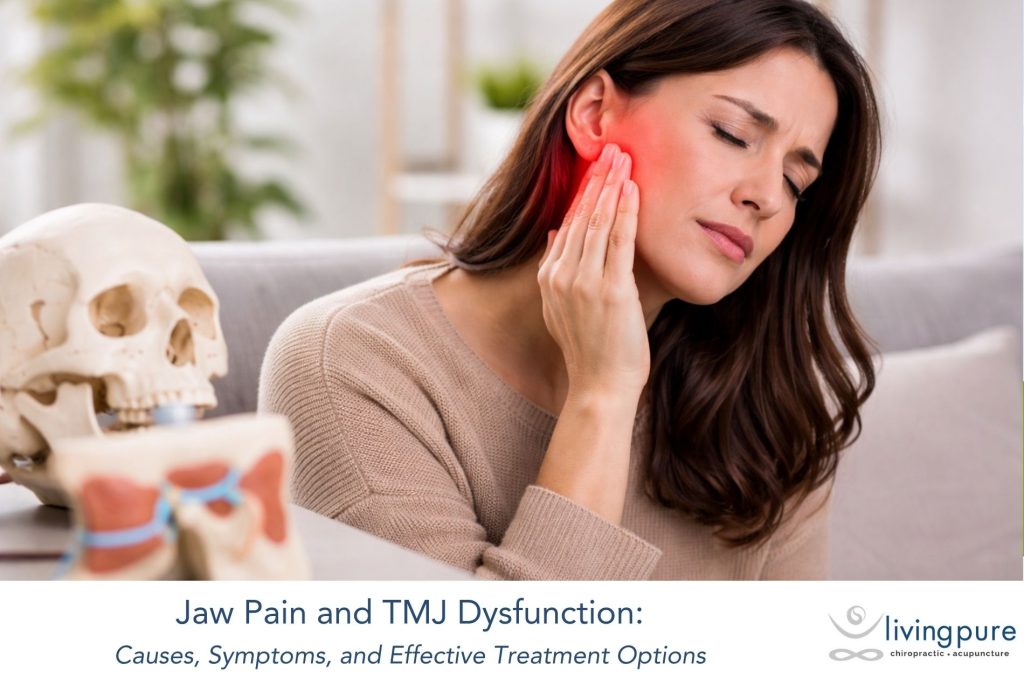
Jaw pain can make everyday activities—like eating, speaking, or even yawning—uncomfortable and frustrating. For many people, this pain is caused by temporomandibular joint (TMJ) dysfunction, a condition that affects the joints connecting your jawbone to your skull. If left untreated, TMJ disorders can lead to chronic discomfort, headaches, and reduced quality of life.
At Living Pure Wellness, patients receive personalized care designed to address the root causes of jaw pain and TMJ dysfunction, helping restore comfort and proper jaw function.
In this guide, we’ll explore what TMJ dysfunction is, what causes it, common symptoms, and the treatment options available to help you feel better.
Understanding the Temporomandibular Joint (TMJ)
The temporomandibular joints are located on each side of your head, just in front of your ears. These joints act like sliding hinges that connect your lower jaw (mandible) to your skull.
They allow your jaw to perform essential movements such as:
- Opening and closing your mouth
- Chewing and biting
- Speaking
- Yawning
- Moving your jaw side to side
Because the TMJ is one of the most frequently used joints in the body, it is also vulnerable to strain, injury, and dysfunction.
When these joints or surrounding muscles become irritated or misaligned, it can lead to TMJ disorder (TMD).
What Is TMJ Dysfunction?
TMJ dysfunction refers to a group of conditions that affect the jaw joint and the muscles that control jaw movement. The condition can range from mild discomfort to severe, chronic pain.
Many people experience TMJ symptoms occasionally, but persistent issues may require professional evaluation and treatment.
Common Symptoms of TMJ Dysfunction
TMJ disorders can produce a wide range of symptoms, some of which may seem unrelated to the jaw.
Common symptoms include:
- Jaw pain or tenderness
- Clicking, popping, or grinding sounds when opening or closing the mouth
- Difficulty chewing or discomfort while chewing
- Locking of the jaw joint
- Limited jaw movement
- Facial pain
- Earaches or ear pressure
- Headaches or migraines
- Neck and shoulder pain
- Pain when yawning or opening the mouth wide
If you regularly experience these symptoms, it may indicate an underlying TMJ disorder.
What Causes Jaw Pain and TMJ Disorders?
TMJ dysfunction can develop for several reasons. Often, it results from a combination of factors affecting the jaw joint and surrounding muscles.
Teeth Grinding and Clenching (Bruxism)
Grinding or clenching your teeth—especially during sleep—places excessive stress on the TMJ. Over time, this pressure can lead to joint inflammation, muscle tension, and jaw pain.
Jaw Injury
A direct injury or trauma to the jaw can disrupt the normal function of the temporomandibular joint.
Misalignment of the Jaw
Improper bite alignment (malocclusion) can cause uneven pressure on the TMJ, contributing to joint dysfunction.
Arthritis
Certain forms of arthritis, including osteoarthritis and rheumatoid arthritis, can affect the TMJ and cause pain and inflammation.
Stress
Stress often leads to unconscious jaw clenching or teeth grinding, which can strain the TMJ.
Poor Posture
Poor posture—particularly forward head posture from computer or phone use—can affect the alignment of the jaw and neck muscles.
How TMJ Dysfunction Affects Daily Life
Jaw disorders can impact many aspects of daily living. Patients with untreated TMJ dysfunction may experience:
- Difficulty eating certain foods
- Frequent headaches
- Sleep disturbances
- Jaw fatigue
- Increased stress due to chronic pain
- Reduced jaw mobility
Early evaluation and treatment can prevent symptoms from worsening.
Treatment Options for Jaw Pain and TMJ Dysfunction
Treatment for TMJ disorders focuses on reducing pain, improving jaw function, and addressing underlying causes.
At Living Pure Wellness, care plans are tailored to each patient’s unique needs.
Chiropractic Care
Chiropractic adjustments can help restore proper alignment to the jaw, neck, and spine. Correcting misalignments can relieve pressure on the TMJ and surrounding muscles.
Muscle Therapy
Soft tissue therapy can reduce muscle tension in the jaw, neck, and face, improving mobility and reducing pain.
Posture Correction
Improving posture can help relieve strain on the jaw joint and supporting muscles.
Lifestyle Recommendations
Patients may benefit from simple lifestyle changes such as:
- Avoiding hard or chewy foods temporarily
- Practicing jaw relaxation exercises
- Managing stress levels
- Using heat or cold therapy
Custom Treatment Plans
Each patient’s TMJ condition is unique. A comprehensive evaluation helps determine the most effective treatment strategy.
When to Seek Professional Help for Jaw Pain
While mild jaw discomfort may resolve on its own, persistent symptoms should not be ignored.
You should consider seeking professional care if you experience:
- Chronic jaw pain
- Difficulty opening or closing your mouth
- Frequent jaw locking
- Severe headaches linked to jaw movement
- Clicking or popping accompanied by pain
Early intervention can prevent TMJ dysfunction from progressing and causing long-term complications.
Frequently Asked Questions About Jaw Pain and TMJ Dysfunction
What is the TMJ?
The TMJ (temporomandibular joint) is the hinge-like joint that connects your jawbone to your skull. It allows your mouth to open, close, and move side to side for speaking and chewing.
What does TMJ pain feel like?
TMJ pain may feel like aching or tenderness in the jaw, face, or around the ears. Some people also experience headaches, ear discomfort, or neck pain.
Is jaw clicking always a sign of TMJ disorder?
Jaw clicking alone does not always indicate a TMJ disorder. However, clicking accompanied by pain, jaw locking, or difficulty chewing may signal an underlying problem.
Can stress cause TMJ dysfunction?
Yes. Stress often leads to teeth clenching or grinding, which can strain the temporomandibular joint and surrounding muscles.
Can TMJ go away on its own?
Some mild TMJ symptoms may resolve without treatment. However, persistent or worsening symptoms usually require professional evaluation and care.
How is TMJ diagnosed?
A healthcare professional will evaluate jaw movement, listen for joint sounds, check for tenderness, and review symptoms. Imaging tests may sometimes be used for further evaluation.
Can chiropractic care help TMJ pain?
Yes. Chiropractic care can help address jaw misalignment, muscle tension, and posture issues that may contribute to TMJ dysfunction.
How long does TMJ treatment take?
Treatment timelines vary depending on the severity of the condition. Some patients experience relief quickly, while others may require ongoing care to fully resolve symptoms.
Contact Living Pure Wellness
If you’re experiencing jaw pain, clicking, or symptoms of TMJ dysfunction, professional care may help restore comfort and improve jaw function.
Living Pure Wellness
18775 N Reems Rd STE 380
Surprise, AZ 85374
Website: arrowheadchiropractors.com