
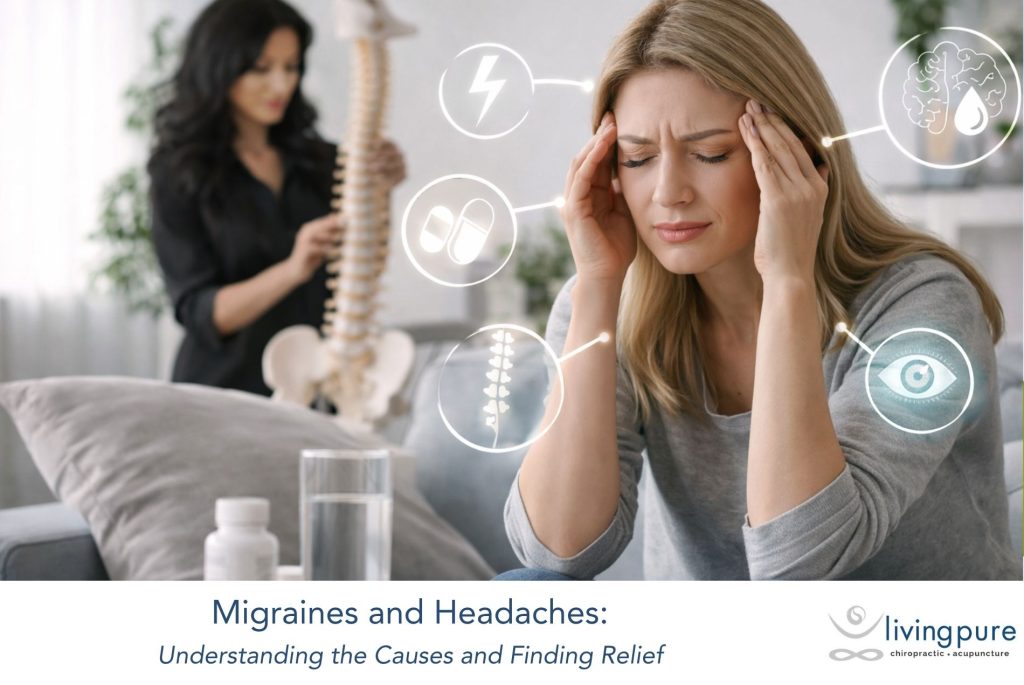
Headaches are among the most common health complaints people experience, but when pain becomes severe, frequent, or debilitating, it may be more than just a typical headache. Migraines and chronic headaches can interfere with daily life, making it difficult to work, sleep, concentrate, or enjoy time with family. For many people, finding lasting relief can feel frustrating and overwhelming.
At Living Pure Wellness, patients receive personalized care focused on identifying the underlying causes of migraines and headaches and helping the body heal naturally. By addressing spinal alignment, nerve function, posture, and lifestyle factors, chiropractic care can be an important part of a comprehensive headache and migraine management plan.
What Are Migraines and Headaches?
A headache refers to pain or discomfort anywhere in the head, scalp, or neck. While many headaches are mild and temporary, others can become chronic or extremely painful.
A migraine is a neurological condition characterized by intense, throbbing head pain often accompanied by additional symptoms such as nausea, light sensitivity, or visual disturbances.
Migraines can last anywhere from a few hours to several days and may significantly disrupt everyday life.
Common Types of Headaches
Understanding the type of headache you experience can help guide the most effective treatment approach.
Tension Headaches
Tension headaches are the most common type. They are often described as a dull, tight, or pressure-like sensation around the head.
Common triggers include:
- Stress
- Poor posture
- Muscle tension in the neck and shoulders
- Eye strain
- Dehydration
Migraines
Migraines are more severe and typically involve:
- Pulsating or throbbing pain
- Pain on one side of the head
- Nausea or vomiting
- Sensitivity to light or sound
- Visual disturbances (auras)
Cervicogenic Headaches
These headaches originate from problems in the neck or cervical spine. Misalignment in the upper spine can irritate nerves and cause pain that radiates to the head.
Cluster Headaches
Cluster headaches are less common but extremely painful. They often occur in cycles and may cause intense pain around one eye.
Common Causes of Migraines and Headaches
Headaches and migraines rarely occur without reason. Many underlying factors may contribute to their development.
Spinal Misalignment
When the spine is not properly aligned, it can place pressure on nerves that travel to the head and neck. This interference may contribute to headache pain.
Poor Posture
Long hours sitting at desks, using phones, or working on computers can strain the neck and upper back muscles, leading to tension headaches.
Stress and Muscle Tension
Stress often causes muscles in the neck, shoulders, and scalp to tighten, which can trigger headaches.
Hormonal Changes
Hormonal fluctuations can also contribute to migraine episodes, particularly for women.
Lifestyle Factors
Other common triggers include:
- Lack of sleep
- Dehydration
- Skipped meals
- Excess caffeine
- Certain foods or additives
How Chiropractic Care May Help
Many people seek chiropractic care as a natural approach to managing migraines and headaches.
Chiropractic treatment focuses on restoring proper alignment of the spine and improving nervous system function. Since the nervous system controls many bodily processes, improving its function may reduce triggers that contribute to headaches.
At Living Pure Wellness, care plans may include:
Spinal Adjustments
Gentle chiropractic adjustments may help restore proper alignment in the spine and reduce nerve irritation that contributes to headache pain.
Postural Correction
Improving posture can reduce strain on the neck and upper back muscles.
Muscle Therapy
Soft tissue therapy may help relieve muscle tension associated with headaches.
Lifestyle and Wellness Guidance
Patients may receive recommendations on:
- Stress management
- Ergonomic improvements
- Exercise and stretching
- Nutrition and hydration
This holistic approach aims to address the root causes of headache pain rather than simply masking symptoms.
When to Seek Professional Care
While occasional headaches are common, you should consider seeking professional evaluation if you experience:
- Frequent or recurring headaches
- Migraines that interfere with daily activities
- Headaches that worsen over time
- Neck pain associated with headaches
- Limited relief from medications
Early intervention can help prevent headaches from becoming chronic.
Preventing Migraines and Headaches
Although not all headaches can be prevented, many lifestyle changes may help reduce their frequency and severity.
Helpful strategies include:
- Maintaining good posture
- Staying hydrated
- Managing stress
- Getting adequate sleep
- Taking regular breaks from screens
- Maintaining proper spinal health
Working with a chiropractor can also help identify triggers and develop a personalized prevention plan.
Q&A: Migraines and Headaches
What is the difference between a migraine and a headache?
A headache is a general term for pain in the head or neck. A migraine is a specific neurological condition that often involves severe pain, nausea, and sensitivity to light or sound.
Can chiropractic care help migraines?
Chiropractic care may help some patients by improving spinal alignment, reducing nerve irritation, and relieving muscle tension that contributes to migraine triggers.
What triggers migraines?
Common migraine triggers include stress, hormonal changes, dehydration, certain foods, lack of sleep, and spinal misalignment.
How long can migraines last?
Migraines can last anywhere from several hours to several days depending on the individual and severity.
Are headaches related to neck problems?
Yes. Many headaches originate from tension or misalignment in the neck, particularly in the upper cervical spine.
How can posture cause headaches?
Poor posture places strain on neck and shoulder muscles. Over time, this tension can lead to recurring headaches.
Can dehydration cause headaches?
Yes. Even mild dehydration can trigger headaches and migraines in some individuals.
When should I see a chiropractor for headaches?
If headaches occur frequently, worsen over time, or are associated with neck pain, chiropractic care may help address underlying spinal issues contributing to the problem.
Find Natural Relief for Migraines and Headaches
If you are struggling with frequent headaches or migraines, identifying the root cause is the first step toward lasting relief. Chiropractic care offers a natural, drug-free approach focused on restoring proper function to the spine and nervous system.
The team at Living Pure Wellness is dedicated to helping patients improve their health, reduce pain, and regain quality of life through personalized care.
Contact Living Pure Wellness
Living Pure Wellness
18775 N Reems Rd STE 380
Surprise, AZ 85374
Website: arrowheadchiropractors.com